Microcement Bathrooms: Seamless and Contemporary
The evolution of modern interior design has seen a significant shift toward minimalism and industrial aesthetics. At the forefront of this movement is microcement, a versatile coating that has redefined the possibilities for bathroom renovations. Traditionally, bathrooms relied heavily on tiles and grout lines, which often presented challenges in both maintenance and design continuity. Microcement offers a high-performance alternative, providing a continuous, joint-free surface that aligns perfectly with the contemporary desire for sleek, uninterrupted lines.
Understanding the Fundamentals of Microcement
Microcement is a cementitious coating composed of cement, water-based resins, additives, and mineral pigments. Unlike traditional concrete, which requires significant thickness to maintain structural integrity, microcement is applied in thin layers, typically totaling no more than 3 millimeters. This thin-set application allows it to be applied over existing surfaces without requiring the removal of old tiles or the adjustment of door clearances.
The material is prized for its exceptional adhesion. It can bond to a wide variety of substrates, including ceramic tiles, plasterboard, marble, and wood. This makes it an ideal solution for homeowners looking to modernize their bathrooms without the labor-intensive and messy process of a full demolition.
The Aesthetic Appeal of Seamless Surfaces
The primary draw of microcement in a bathroom setting is its visual continuity. In a standard tiled bathroom, the eye is constantly interrupted by grout lines. These lines create a grid-like pattern that can make smaller bathrooms feel cramped and visually cluttered.
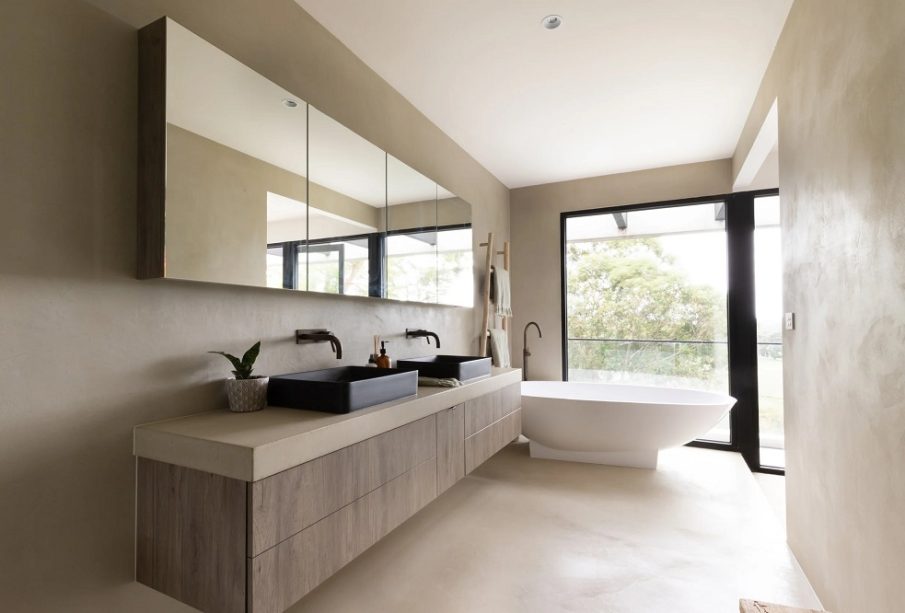
Microcement eliminates these interruptions. By creating a single, flowing surface that can extend from the floors to the walls and even into the shower tray, the material fosters a sense of spaciousness. This “infinity” effect is a hallmark of high-end, contemporary design. Furthermore, because microcement is available in a vast array of colors and finishes—ranging from matte and satin to high-gloss—it can be customized to suit any color palette, from earthy terracottas to sophisticated charcoal grays.
Technical Advantages in Wet Environments
Bathrooms are arguably the most demanding environments in a home due to constant exposure to moisture, steam, and temperature fluctuations. Microcement is engineered to thrive in these conditions when applied correctly.
-
Waterproofing: While the material itself is porous, the application process involves several layers of high-quality sealants and varnishes. These topcoats create an impermeable barrier that prevents water from penetrating the substrate, making it perfectly suitable for walk-in showers and wet rooms.
-
Hygiene and Maintenance: Grout is notoriously difficult to clean and is a common breeding ground for mold and mildew. Because microcement is seamless, there are no crevices for dirt or bacteria to accumulate. Cleaning typically requires nothing more than a damp cloth and a pH-neutral cleanser.
-
Thermal Conductivity: Microcement is an excellent conductor of heat. It is highly compatible with underfloor heating systems, as the thinness of the material allows heat to radiate quickly and evenly into the room, enhancing the comfort of the bathroom during colder months.
The Installation Process: A Craft of Precision
Applying microcement is a specialized craft that requires a meticulous multi-step process. It is not a standard DIY project, as the quality of the finish depends heavily on the skill of the applicator.
-
Surface Preparation: The existing substrate must be clean, dry, and structurally sound. Any loose tiles or cracks must be repaired. A primer is then applied to ensure maximum adhesion.
-
Fiberglass Mesh: In many installations, a fine fiberglass mesh is embedded into the first layer of microcement. This provides reinforcement and helps prevent cracking caused by minor movements in the building’s structure.
-
Layering: The microcement is applied in several thin coats using a steel trowel. The technique used during this stage determines the final texture. Some prefer a smooth, uniform look, while others opt for a more “movemented” finish that shows the artisanal strokes of the trowel.
-
Sanding: Between coats, the surface is lightly sanded to remove imperfections and ensure a level finish.
-
Sealing: Once the final coat has dried, the surface is treated with a pore-filler and multiple layers of polyurethane sealer. This step is critical for ensuring the bathroom is fully waterproof and resistant to stains.
Durability and Longevity
Microcement is remarkably durable for its thickness. It possesses high resistance to abrasion and impact. However, it is important to understand that while it is tough, it is not indestructible. Much like natural stone or hardwood, it can be scratched by sharp objects or heavy impacts.
The longevity of a microcement bathroom depends largely on the quality of the sealant. Over time, particularly in high-traffic areas or areas with standing water, the sealer may need to be refreshed. With proper care and occasional resealing every few years, a microcement surface can remain in pristine condition for decades.
Design Versatility Beyond Floors and Walls
One of the most innovative uses of microcement is its application on fixtures and furniture. Designers are increasingly using the material to create bespoke bathroom elements that match the surrounding surfaces.
-
Integrated Sinks: Microcement can be applied over custom-built vanity units to create seamless, integrated sinks. This creates a sculptural look where the basin appears to grow out of the countertop.
-
Bathtub Surrounds: Standard bathtubs can be encased in a microcement frame to help them blend into the room’s architecture.
-
Built-in Shelving: Niches and shelving units built into the wall can be coated in microcement, eliminating the need for bulky metal or plastic caddies.
Environmental Considerations
For the eco-conscious homeowner, microcement presents several benefits. Because it can be applied directly over existing materials, it significantly reduces the amount of construction waste that would otherwise head to a landfill. Furthermore, many modern microcement formulations use water-based resins and low-VOC (Volatile Organic Compound) components, contributing to better indoor air quality compared to some traditional synthetic coatings.
Cost and Investment
The cost of microcement is generally higher than budget-friendly tiling, primarily due to the labor-intensive nature of the application. Each layer requires drying time, and the process often takes five to seven days to complete. However, when considering the long-term value, microcement can be more cost-effective than high-end marble or stone. The savings on demolition costs also help offset the initial investment.
Frequent Questions Regarding Microcement Bathrooms
Can microcement be applied over plywood or wooden subfloors?
Yes, microcement can be applied to wooden surfaces, provided they are rigid and properly prepared. Wood is more prone to movement than concrete or tile, so the use of a fiberglass mesh and a flexible primer is essential to prevent the microcement from developing hairline cracks over time.
Is the surface slippery when wet?
The slip resistance of microcement can be adjusted during the sealing process. For bathroom floors and shower trays, anti-slip additives can be mixed into the final sealer. These invisible particles provide necessary traction without compromising the aesthetic of the finish.
How does microcement react to harsh chemicals like hair dye or bleach?
While the polyurethane sealers used on microcement are highly resistant to staining, harsh chemicals like bleach or strong hair dyes should be used with caution. It is recommended to wipe away spills immediately. For general cleaning, pH-neutral soaps are preferred, as acidic or abrasive cleaners can gradually degrade the protective sealant.
What happens if the microcement gets a crack or a chip?
One of the advantages of microcement is that it can be repaired. Unlike a cracked tile which usually needs to be replaced, small chips or cracks in microcement can be filled and blended with a matching compound. However, significant structural cracks in the building may require a more extensive touch-up of the affected area.
Can I use microcement in a steam room or sauna?
While microcement is excellent for standard bathrooms and showers, steam rooms involve extreme humidity and constant high temperatures. Only specific high-performance microcement systems designed for high-temperature environments should be used in these cases. It is vital to consult with the manufacturer to ensure the specific resin used can withstand such conditions.
Is it possible to change the color of the bathroom later on?
If you decide to change your design scheme in the future, you do not need to remove the existing microcement. You can simply lightly sand the surface and apply a new layer of microcement in a different color, or even paint over it using specialized coatings.
Does microcement require a specific type of drainage system?
Microcement is highly compatible with modern linear drains and “wet room” style drainage. Because the material can be troweled to create a precise fall or slope toward the drain, it is often easier to achieve perfect drainage with microcement than with large-format tiles.